




WHAT IS A TRANSFER-ON-DEATH DEED?
A Transfer-on-Death Deed (TODD) lets you name who inherits your property — without giving them any ownership rights until your death.
Unlike adding someone to your deed today, a TOD deed:
- Keeps YOU in full control
- Avoids probate completely
- Transfers automatically upon death
This powerful estate planning tool is now available in Georgia.

WHY GEORGIA HOMEOWNERS ARE SWITCHING TO TOD DEEDS
Skip Probate Completely
Your property transfers directly to your beneficiary — no court delays, no legal fees.

Maintain Full Ownership
You can sell, refinance, or change your mind at any time.

Protect Your Family Home
Ensure your home goes exactly where you want — without complications.
HOW IT WORKS
Step 1: Create Your TOD Deed
We prepare your legally compliant Georgia Transfer-on-Death Deed.
Step 2: Sign & Record
You sign in front of a notary and record it with your county.
Step 3: Property Transfers Automatically
Upon your death, your beneficiary becomes the owner — no probate required.
WHO SHOULD CONSIDER A TOD DEED?
✔ Homeowners who want to avoid probate
✔ Parents leaving property to children
✔ Individuals without a trust
✔ Anyone wanting a simple estate plan

WHY CHOOSE OUR FIRM
✔ Georgia-specific TOD deed expertise
✔ Flat, transparent pricing
✔ Fast turnaround
✔ Attorney-prepared documents
Testimonials
★★★★★
Transfer-on-Death Deed Blog Posts

7 Mistakes to Avoid When Creating a Transfer-on-Death Deed in Georgia
A TOD deed is powerful — but mistakes can cause serious problems. 1. Not Recording the Deed If it’s not recorded, it’s not valid. 2. Naming the Wrong Beneficiary Errors can lead to disputes or unintended outcomes. 3. Forgetting to Update It Life changes — your deed…
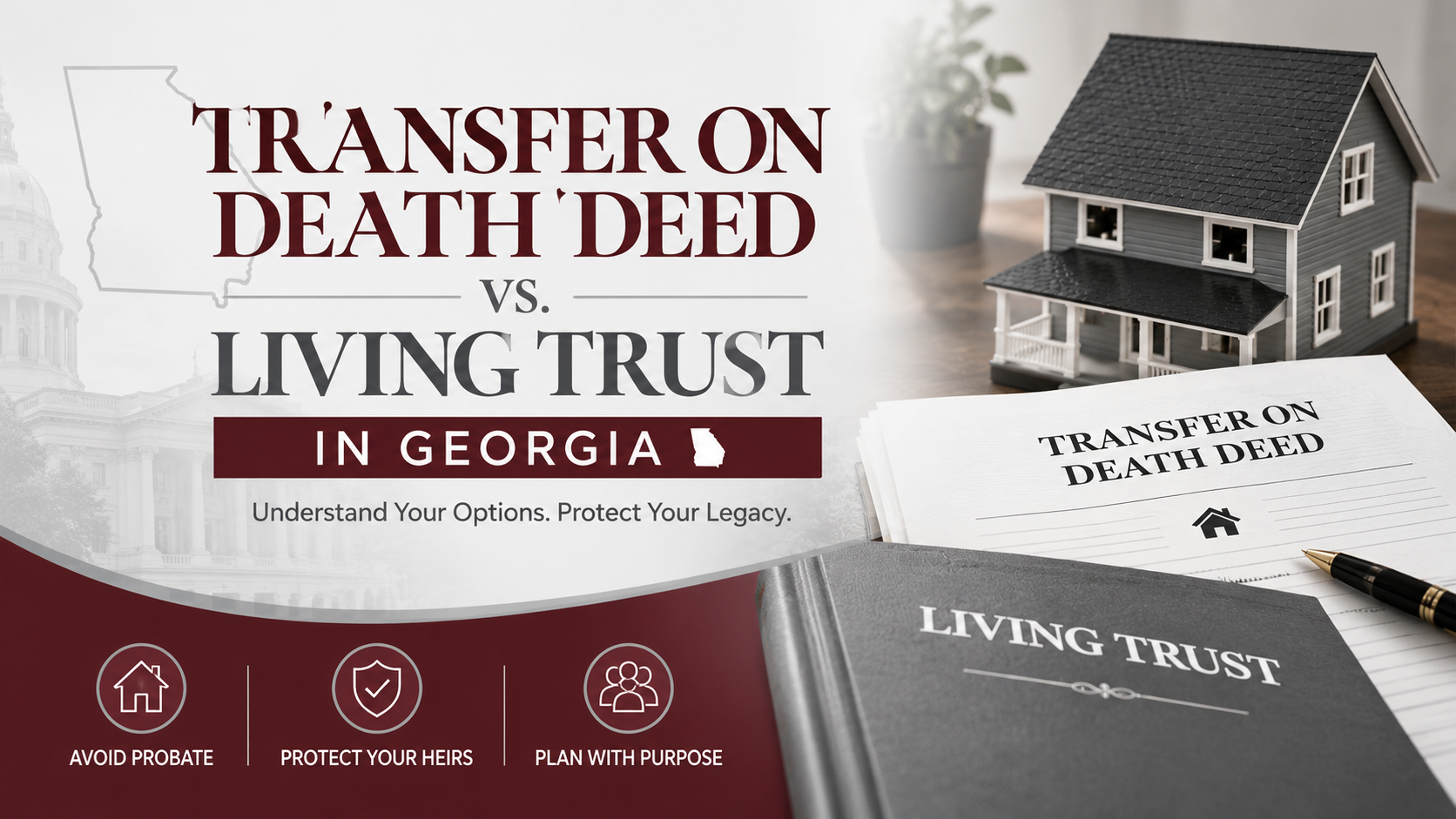
Transfer-on-Death Deed vs. Living Trust: Which Is Better in Georgia?
Choosing between a TOD deed and a living trust depends on your goals. Transfer-on-Death Deed Best for: Simplicity Lower cost One primary property Pros: Avoids probate Easy to set up Revocable anytime Cons: Limited to real estate Less flexibility Living Trust Best for:…
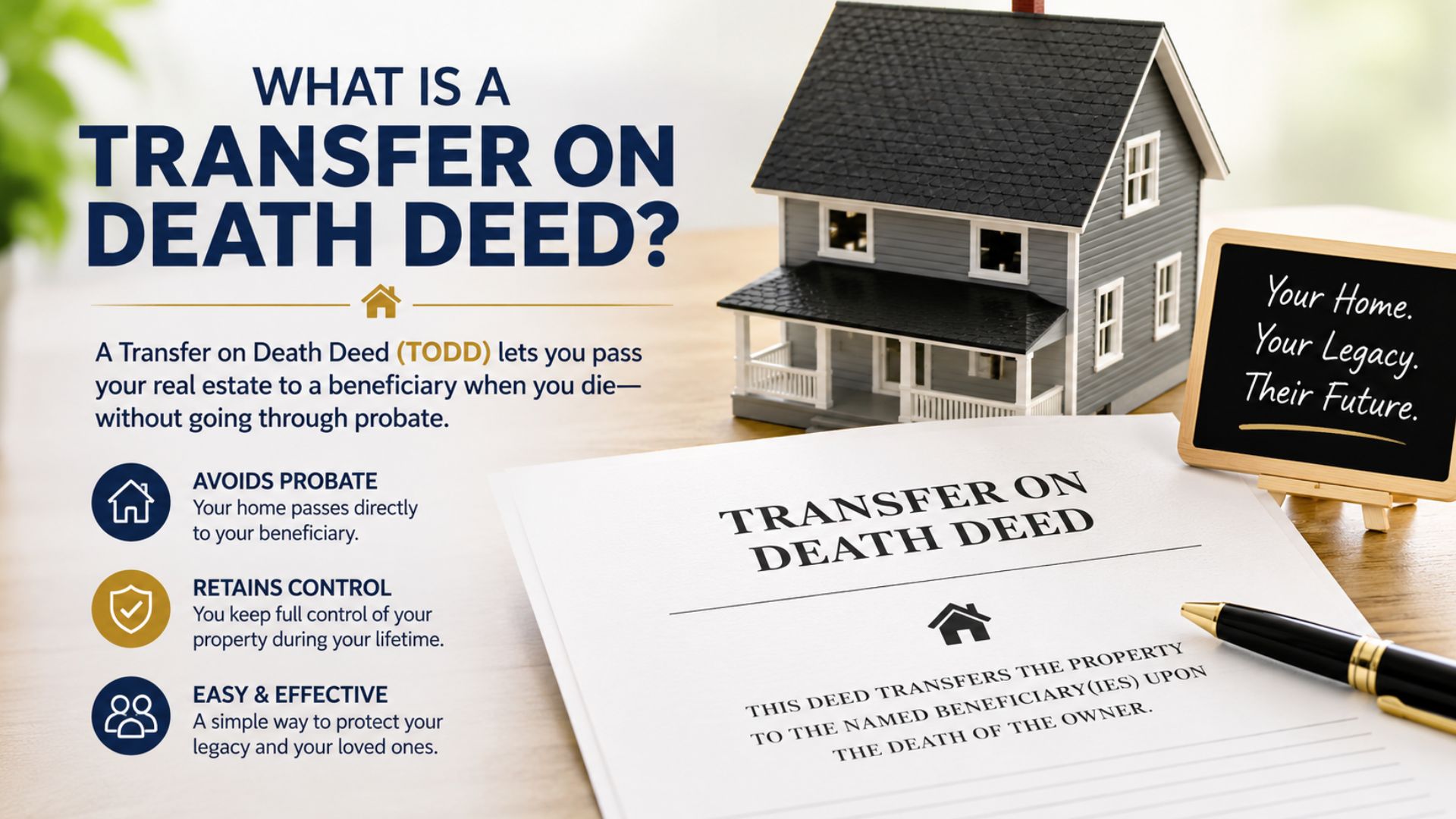
What Is a Transfer-on-Death Deed in Georgia? (2026 Guide)
If you own a home in Georgia, there’s a new way to pass your property to your family — without probate. It’s called a Transfer-on-Death Deed (TODD), and it’s quickly becoming one of the most popular estate planning tools. How It Works A TOD deed allows you to name a…
Transfer-on-Death Deed FAQ (Georgia)
What is a Transfer-on-Death Deed?
A Transfer-on-Death Deed (TODD) allows you to name a beneficiary who will receive your real estate automatically upon your death without probate.
Does a TOD deed avoid probate in Georgia?
Yes. Property transfers directly to your beneficiary without going through probate court.
When did TOD deeds become legal in Georgia?
TOD deeds became effective July 1, 2024 under Georgia law.
Do I lose ownership of my home?
No. You retain full ownership and control during your lifetime.
Can I change or revoke a TOD deed?
Yes. TOD deeds are fully revocable.
Can I sell my property after creating a TOD deed?
Yes. You can sell, refinance, or transfer the property at any time.
Does the beneficiary have rights before I die?
No. The beneficiary has zero ownership rights until your death.
Can I name multiple beneficiaries?
Yes. You can name multiple beneficiaries and specify how ownership is divided.
What happens if a beneficiary dies before me?
That portion may lapse unless alternative provisions are included.
Do I still need a will?
A will is still recommended for other assets not covered by the TOD deed.
Is a TOD deed better than a trust?
It depends. TOD deeds are simpler and cheaper, but trusts offer broader control.
Are there tax benefits?
Beneficiaries typically receive a “step-up in basis,” reducing capital gains taxes.
What are the risks of a TOD deed?
- Improper drafting
- Conflicts with other estate plans
- Issues with multiple beneficiaries
Do I need a lawyer to create one?
Strongly recommended to ensure compliance with Georgia law.
What happens after death?
The beneficiary files an affidavit and becomes the legal owner.
Can creditors still claim the property?
Yes, certain liens and debts may still apply.
How do I get started?
Contact our office at (770) 305-6573 or email aklaw707@gmail.com for a consultation and document preparation.